Introduction↑
Background
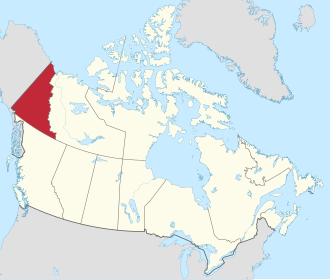
Yukon is a territory in northwestern Canada known for its wild, untouched wilderness, towering mountains, and legendary gold rush history. Formally separated from the Northwest Territories in 1898 to manage the influx of prospectors, Yukon is a breathtaking land of alpine tundras, rushing rivers, and rich Indigenous heritage. Its capital and largest settlement is Whitehorse.
Geography↑
Land and Water
Yukon features an extremely rugged and dramatic topography dominated by the St. Elias Mountains and the Coast Mountains. The landscape transitions from dense subarctic boreal forests in the interior valleys to stark Arctic tundra along its northern Beaufort Sea coast. It is famously carved by the historic Yukon River, which winds its way across the territory toward Alaska.
Location: Northwestern Canada
Geographic coordinates: 60°00′ N to 69°39′ N, 123°50′ W to 141°00′ W
Area: total: 186,272 sq mi (482,443 km2) | land: 176,472 sq mi (457,062 km2) | water: 9,800 sq mi (25,381 km2) | coastline: 230 miles (Arctic Ocean)
Bordering Regions: British Columbia, Northwest Territories, Alaska (USA)
Elevation extremes: lowest point: Beaufort Sea coast at sea level (0 ft) | highest point: Mount Logan at 19,551 ft (5,959 m) (Canada's highest peak)
Population↑
Demographics
Population: 50,356 (2026 estimate)
Largest City: Whitehorse: 28,225 (2026)
Age structure: 0-14 years: ~17.1% | 15-64 years: ~68.5% | 65 years and over: ~14.4% | Male: 50.4% | Female: 49.6%
Population growth rate: ~2.5% annually
Population density: 0.27 per sq mi (0.11 per sq km)
History↑
The Klondike Gold Rush and First Nations
For millennia, Yukon was stewarded by self-governing First Nations, including the Kwanlin Dün, Champagne and Aishihik, Tr'ondëk Hwëch'in, and Vuntut Gwitchin peoples. The region's history shifted dramatically in 1896 with the discovery of gold in Rabbit Creek (renamed Bonanza Creek) near Dawson City, which sparked the legendary 1897–1899 Klondike Gold Rush and brought tens of thousands of stampeders rushing into the remote territory.
Economy↑
Mining and Tourism
Mining remains a cornerstone of Yukon's economy, extracting valuable deposits of gold, silver, lead, zinc, and copper. In addition to mineral extraction, government services and a thriving tourism industry are primary economic drivers, as hundreds of thousands of visitors travel north annually to witness the Northern Lights, explore Kluane National Park, and experience untouched wilderness.
Fun Facts↑
Did You Know?
Mount Logan: Yukon is home to Mount Logan, the highest mountain in Canada and the second-highest peak in all of North America at 19,551 feet!
Midnight Sun: During mid-summer, Yukon experiences nearly 24 hours of daylight, allowing plants to grow rapidly and outdoor adventures to continue long past midnight.
The Sign Post Forest: Located in Watson Lake, Yukon, the famous Sign Post Forest features over 100,000 directional signs planted by travelers from all over the globe.