Introduction↑
Background
Prince Edward Island (PEI) is Canada's smallest province by both land area and population. Known as the "Garden of the Gulf" and the birthplace of Canadian Confederation, it is famous for its rolling green hills, red sandstone cliffs, sandy beaches, and world-class potatoes. Its capital and largest city is Charlottetown.
Geography↑
Land and Water
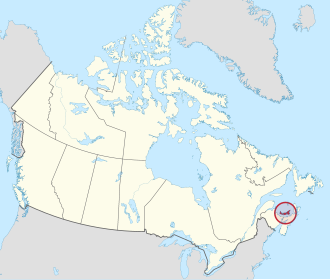
PEI is a crescent-shaped island situated in the Gulf of St. Lawrence. The landscape is characterized by gentle farmlands, rich red soil containing high concentrations of iron oxide, and picturesque coastal inlets and lighthouses. It is connected to mainland New Brunswick by the magnificent 8-mile-long Confederation Bridge.
Location: Eastern Canada / Atlantic Canada (Maritimes)
Geographic coordinates: 45°58′ N to 47°03′ N, 61°58′ W to 64°24′ W
Area: total: 2,185 sq mi (5,660 km2) | land: 2,185 sq mi (5,660 km2) | water: negligible inland lakes | coastline: c. 680 miles (Gulf of St. Lawrence)
Bordering Regions: New Brunswick, Nova Scotia (maritime borders)
Elevation extremes: lowest point: Gulf of St. Lawrence sea level (0 ft) | highest point: Springton at 466 ft (142 m)
Population↑
Demographics
Population: 177,500 (2026 estimate)
Largest City: Charlottetown: 42,000 (2026)
Age structure: 0-14 years: ~16.0% | 15-64 years: ~61.5% | 65 years and over: ~22.5% | Male: 49.0% | Female: 51.0%
Population growth rate: ~3.5% annually
Population density: 81.2 per sq mi (31.3 per sq km)
History↑
Mi'kmaq Heritage and Confederation
The island's original inhabitants are the Mi'kmaq people, who named the island Epekwitk, meaning "caving in like a home" in the Mi'kmaq language. French explorers colonized it in the early 18th century as Île Saint-Jean before British forces took control. In 1864, Charlottetown hosted the historic conference that laid the groundwork for Canadian Confederation, earning PEI the proud title "Birthplace of Confederation," though it officially joined as a province in 1873.
Economy↑
Agriculture, Tourism, and Fisheries
PEI's economy is driven by agriculture—particularly famous Russet potato farming across its rich red soil—along with commercial fishing (lobster and mussels), food processing, and a vibrant tourism industry that welcomes visitors from all over the world.
Fun Facts↑
Did You Know?
Anne of Green Gables: PEI is the beloved setting of the classic novel Anne of Green Gables, written by Lucy Maud Montgomery in 1908.
Red Sand Beaches: The island's signature red sand beaches get their vibrant color from the high iron oxide content in PEI's weathered sandstone soil.
The Confederation Bridge: Stretching 8 miles (12.9 km) across the Northumberland Strait, this engineering marvel is the longest bridge over ice-covered waters in the world.