Introduction↑
Background
Nunavut is Canada's largest, newest, and northernmost territory, officially separating from the Northwest Territories on April 1, 1999. Meaning "Our Land" in Inuktitut, Nunavut represents a historic milestone for the Inuit people, who make up the majority of the territory's population. Its capital and largest community is Iqaluit, located on Baffin Island.
Geography↑
Land and Water
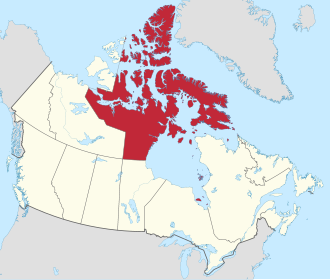
Nunavut's expansive geography includes a vast portion of northern Canada, spanning mainland tundra, remote Arctic islands (such as Baffin, Ellesmere, and Victoria islands), and a dramatic coastline along the Arctic Ocean and Hudson Bay. The terrain is characterized by permafrost, low-growing arctic vegetation, sweeping lowlands, and rugged arctic mountains.
Location: Northern Canada / Canadian Arctic
Geographic coordinates: 51°38′ N to 83°10′ N, 61°00′ W to 120°00′ W
Area: total: 808,185 sq mi (2,093,190 km2) | land: 728,153 sq mi (1,885,904 km2) | water: 80,032 sq mi (207,286 km2) | coastline: c. 22,000 miles (Arctic Ocean)
Bordering Regions: Northwest Territories, Manitoba, Saskatchewan, Greenland (maritime border)
Elevation extremes: lowest point: Arctic Ocean sea level (0 ft) | highest point: Barbeau Peak at 8,583 ft (2,616 m)
Population↑
Demographics
Population: 41,050 (2026 estimate)
Largest City: Iqaluit: 8,050 (2026)
Age structure: 0-14 years: ~28.5% | 15-64 years: ~65.2% | 65 years and over: ~6.3% | Male: 51.0% | Female: 49.0%
Population growth rate: ~1.5% annually
Population density: 0.05 per sq mi (0.02 per sq km)
History↑
Inuit Heritage and Modern Territory
The Inuit and their ancestors have inhabited the harsh and beautiful lands of Nunavut for thousands of years, relying on traditional knowledge, hunting, and fishing to thrive in the Arctic climate. Following decades of land-claim negotiations led by Inuit Tapiriit Kanatami, the historic Nunavut Land Claims Agreement was signed in 1993, paving the way for the creation of the territory in 1999.
Economy↑
Mining and Traditional Harvest
Nunavut's economy is driven primarily by mining (extraction of gold, iron ore, and diamonds), public administration, and construction. Traditional activities such as hunting, fishing, trapping, and the creation of world-renowned Inuit carvings and arts also play a vital role in local communities and household livelihoods.
Fun Facts↑
Did You Know?
Youngest Population: Nunavut has the youngest population of any province or territory in Canada, with a median age under 30 years old.
Land of the Midnight Sun: Because much of Nunavut lies above the Arctic Circle, it experiences 24 hours of daylight during the height of summer and weeks of continuous twilight or darkness in winter.
Inuktitut Language: Inuktitut and Inuinnaqtun are widely spoken across the territory, making Nunavut one of the few places in Canada where an Indigenous language is the primary language of daily life and governance.