Introduction↑
Background
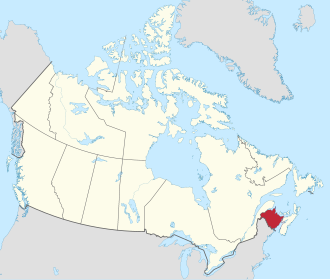
New Brunswick is one of Canada's four Atlantic provinces, renowned for its rolling Appalachian mountains, dense forests, and incredible coastal tides. As one of the original provinces to form Canada in 1867, it features a rich bilingual heritage, vibrant coastal communities, and breathtaking natural wonders. Its capital city is Fredericton, while its largest city is Moncton.
Geography↑
Land and Water
New Brunswick's landscape is heavily forested, with nearly 85% of the province covered by lush woodlands. It is bordered by the Atlantic Ocean, the Gulf of St. Lawrence, and the Bay of Fundy—which boasts the highest tides in the entire world. The interior is characterized by the rolling hills of the Appalachian mountain range and a complex network of winding rivers.
Location: Eastern Canada / Atlantic Canada (Maritimes)
Geographic coordinates: 45°02′ N to 48°04′ N, 63°46′ W to 69°04′ W
Area: total: 29,380 sq mi (72,908 km2) | land: 27,617 sq mi (71,388 km2) | water: 1,763 sq mi (4,565 km2) | coastline: c. 1,400 miles (Atlantic Ocean / Bay of Fundy)
Bordering Regions: Nova Scotia, Quebec, Prince Edward Island (maritime), Maine (USA)
Elevation extremes: lowest point: Atlantic Ocean sea level (0 ft) | highest point: Mount Carleton at 2,690 ft (820 m)
Population↑
Demographics
Population: 855,000 (2026 estimate)
Largest City: Moncton: 165,000 (2026)
Age structure: 0-14 years: ~15.5% | 15-64 years: ~61.5% | 65 years and over: ~23.0% | Male: 49.5% | Female: 50.5%
Population growth rate: ~2.0% annually
Population density: 31.0 per sq mi (12.0 per sq km)
History↑
First Nations, Acadians, and Loyalists
For thousands of years, the region was home to the Mi'kmaq, Wolastoqiyik (Maliseet), and Peskotomuhkati (Passamaquoddy) nations. European settlement began with French colonists known as Acadians in the 17th and 18th centuries. Following the American Revolution, tens of thousands of United Empire Loyalists arrived, shaping the culture, governance, and rapid growth of the colony before it joined Confederation in 1867.
Economy↑
Forestry, Fishing, and Tourism
New Brunswick's economy relies heavily on forestry and paper product manufacturing due to its vast woodlands, alongside a robust commercial fishing and aquaculture industry along its long coastline. Service industries, agriculture (such as famous potato farming in the Saint John River valley), mining, and tourism are also major contributors to the provincial economy.
Fun Facts↑
Did You Know?
The Bay of Fundy Tides: The Bay of Fundy experiences the highest tides in the world, moving over 100 billion tons of water twice a day—equal to the flow of all the world's freshwater rivers combined!
Hopewell Rocks: At low tide, visitors can walk on the ocean floor among towering flowerpot rock formations carved out by the rushing waters of the Bay of Fundy.
Bilingual Province: New Brunswick is officially Canada's only completely bilingual province, with both English and French recognized equally in laws, government, and daily life.