Introduction↑
Background
Nova Scotia is a picturesque maritime province nearly surrounded by the Atlantic Ocean, featuring scenic fishing villages, rugged cliffs, and rich Celtic culture. Known as Canada's "Ocean Playground," it was one of the founding provinces of Canada in 1867. Its capital and largest city is Halifax, a vibrant historic port city renowned for its deep maritime roots.
Geography↑
Land and Water
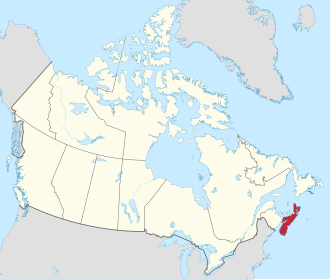
Nova Scotia consists of a main peninsula connected to the mainland by the Isthmus of Chignecto, along with adjacent Cape Breton Island and over 3,000 coastal islands. The landscape features rolling hills, fertile river valleys, and an extensive, jagged coastline where no point is more than 35 miles from the ocean.
Location: Eastern Canada / Atlantic Canada
Geographic coordinates: 43°25′ N to 47°02′ N, 59°40′ W to 66°15′ W
Area: total: 21,345 sq mi (55,284 km2) | land: 20,296 sq mi (52,568 km2) | water: 1,049 sq mi (2,716 km2) | coastline: c. 4,600 miles (Atlantic Ocean)
Bordering Regions: New Brunswick, Prince Edward Island (maritime)
Elevation extremes: lowest point: Atlantic Ocean sea level (0 ft) | highest point: White Hill at 1,752 ft (534 m)
Population↑
Demographics
Population: 1,075,000 (2026 estimate)
Largest City: Halifax: 450,000 (2026)
Age structure: 0-14 years: ~15.0% | 15-64 years: ~63.5% | 65 years and over: ~21.5% | Male: 49.0% | Female: 51.0%
Population growth rate: ~2.2% annually
Population density: 53.0 per sq mi (20.5 per sq km)
History↑
Mi'kmaq Nation and European Settlement
For thousands of years, Nova Scotia has been the ancestral and unceded territory of the Mi'kmaq Nation, who called the region Mi'kmaqi. European settlement began with French colonists in the early 1600s who established Acadia, followed later by British control and the founding of Halifax in 1749. Scottish immigrants later arrived in large numbers, embedding deep Celtic music, dance, and traditions across the province.
Economy↑
Fishing, Shipping, and Tourism
Nova Scotia's economy is anchored by ocean-related industries including commercial seafood harvesting and aquaculture, shipbuilding, and international shipping through the port of Halifax. Tourism is also a massive economic driver, drawing millions of visitors to iconic locations like Peggy's Cove, the Cabot Trail, and historic coastal fortresses.
Fun Facts↑
Did You Know?
Peggy's Cove Lighthouse: The iconic lighthouse at Peggy's Cove is one of the most photographed and recognized maritime landmarks in the entire world.
The Cabot Trail: This world-famous scenic highway winds through the highlands of Cape Breton Island, offering breathtaking panoramic views of rugged ocean cliffs and deep green valleys.
Tidal Power: The Minas Basin in the Bay of Fundy experiences some of the most powerful tidal currents on Earth, making it a major center for researching renewable tidal energy.