Introduction↑
Background
Alberta is a vibrant province located in Western Canada, renowned for its breathtaking natural beauty, dramatic mountain ranges, and booming energy industries. It officially became a Canadian province on September 1, 1905, and was named after Princess Louise Caroline Alberta, the fourth daughter of Queen Victoria. The capital city is Edmonton, while its largest city is Calgary.
Geography↑
Land and Water
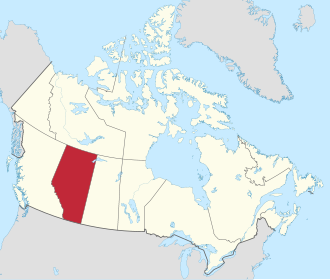
Alberta's landscape is exceptionally diverse. The western edge is dominated by the majestic peaks, glaciers, and alpine lakes of the Canadian Rocky Mountains, featuring world-famous national parks like Banff and Jasper. Moving eastward, the terrain flattens into vast rolling prairie grasslands and rich agricultural farmlands. In the far north, the environment shifts into thick boreal forests and peaceful wetlands.
Location: Western Canada / Canadian Prairies
Geographic coordinates: 49°00′ N to 60°00′ N, 110°00′ W to 120°00′ W
Area: total: 255,541 sq mi (661,848 km2) | land: 248,002 sq mi (642,317 km2) | water: 7,539 sq mi (19,531 km2) | coastline: 0 mi (landlocked)
Bordering Regions: British Columbia, Saskatchewan, Northwest Territories, Montana (USA)
Elevation extremes: lowest point: Slave River at 690 ft (210 m) | highest point: Mount Columbia at 12,293 ft (3,747 m)
Population↑
Demographics
Population: 4,800,000 (2026 estimate)
Largest City: Calgary: 1,678,073 (2026)
Age structure: 0-14 years: ~18.2% | 15-64 years: ~64.1% | 65 years and over: ~17.7% | Male: 50.1% | Female: 49.9%
Population growth rate: ~4.0% annually
Population density: 18.8 per sq mi (7.3 per sq km)
History↑
From Indigenous Lands to Western Growth
For thousands of years prior to European settlement, Indigenous peoples including the Blackfoot Confederacy (Siksika, Kainai, and Piikani), the Cree, Stoney Nakoda, Tsuut'ina, and Dene hunted and thrived across the region. In the late 18th and 19th centuries, the fur trade opened up the territory through posts established by the Hudson's Bay Company and the North West Company. Later, the arrival of the Canadian Pacific Railway sparked rapid homesteading and population growth across the prairies.
Economy↑
Energy, Agriculture, and Tourism
Alberta's economy is heavily driven by its vast natural resources, particularly petroleum, natural gas, and oil sands production. Beyond energy, agriculture plays a major role with extensive cattle ranching and grain farming across the southern plains. Tourism is also a massive economic powerhouse, drawing millions of visitors annually to explore the province's pristine mountain parks.
Fun Facts↑
Did You Know?
Dinosaur Capital: Dinosaur Provincial Park in southern Alberta is home to some of the richest dinosaur fossil beds in the world, dating back millions of years.
The Calgary Stampede: Every July, Calgary hosts the world-famous "Calgary Stampede," a massive ten-day outdoor rodeo and festival celebrating western heritage.
Lake Louise: Alberta's famous Lake Louise gets its striking, brilliant turquoise color from "rock flour"—fine mineral dust ground up by glaciers sliding down the mountains.