Introduction↑
Background
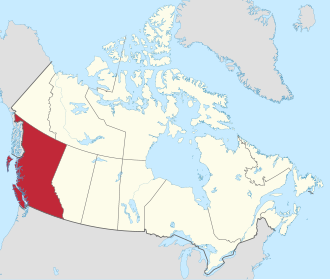
British Columbia (BC) is Canada's westernmost province, bounded by the Pacific Ocean to the west and the soaring peaks of the Rocky Mountains to the east. Known worldwide for its stunning natural scenery, mild coastal climate, and diverse ecosystems, British Columbia officially joined the Canadian Confederation on July 20, 1871. The capital city is Victoria, located on Vancouver Island, while its largest metropolitan hub is Vancouver.
Geography↑
Land and Water
The geography of British Columbia is characterized by rugged mountains, deep fjords, and vast temperate rainforests. Major mountain ranges include the Coast Mountains and the Rockies, separated by sweeping plateaus and deep river valleys like the Fraser and the Columbia. BC features thousands of islands along its dramatic Pacific coastline, with Vancouver Island and Haida Gwaii being the most prominent.
Location: Western Canada
Geographic coordinates: 49°00′ N to 60°00′ N, 114°04′ W to 139°03′ W
Area: total: 364,764 sq mi | land: 357,216 sq mi | water: 7,548 sq mi | coastline: 17,000 miles
Bordering Regions: Alberta, Yukon, Northwest Territories, Washington, Idaho, Montana, Alaska
Elevation extremes: lowest point: Pacific Ocean sea level (0 ft) | highest point: Mount Fairweather 15,299 ft
Population↑
Demographics
Population: 5,710,598 (2026 estimate)
Largest City: Vancouver: 751,644 (2026)
Age structure: 0-14 years: ~14.9% | 15-64 years: ~64.8% | 65 years and over: ~20.3% | Male: 49.3% | Female: 50.7%
Population growth rate: ~2.1% annually
Population density: 12 per sq mi (4.8 per sq km)
History↑
Indigenous Heritage and Exploration
Long before European contact, British Columbia was home to a rich and diverse array of First Nations cultures, including the Coast Salish, Haida, Nuu-chah-nulth, Tsimshian, and Kwakwaka'wakw peoples, who thrived along the abundant coast and river systems. European exploration began with maritime explorers like Captain James Cook and George Vancouver in the late 18th century, followed by the fur trade overland, the Fraser Canyon Gold Rush, and eventual union with Canada.
Economy↑
Resources and Innovation
British Columbia's economy is multifaceted, driven heavily by forestry, mining, fishing, and agriculture. In recent decades, technology industries, film production (often called "Hollywood North"), international shipping through the Port of Vancouver, and a thriving tourism sector have grown to become powerful pillars of economic strength.
Fun Facts↑
Did You Know?
Pacific Gateway: BC boasts Canada's longest coastline, stretching over 27,000 kilometers when factoring in all of its rugged islands and deep coastal inlets.
Spirit Bears: The rare Kermode bear—often called the "Spirit Bear," a black bear with unique white fur—lives almost exclusively in the ancient rainforests of coastal British Columbia.
Mildest Climate: Victoria and the southern coast of BC experience some of the mildest winter weather in all of Canada, rarely seeing heavy snowfall at sea level.