Introduction↑
Background
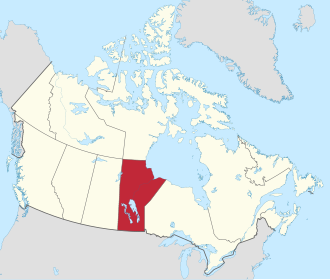
Manitoba is centrally located in Canada, earning it the famous nickname the "Keystone Province" because it sits right in the middle of the country. Known for its friendly communities, rich multicultural history, and incredible natural landscapes, Manitoba officially entered Confederation to become Canada's fifth province on July 15, 1870. Its capital and largest city is Winnipeg.
Geography↑
Land and Water
Manitoba features a very diverse landscape. The southern and western portions consist of flat, fertile prairies once covered by prehistoric glacial Lake Agassiz. Moving north and east, the landscape transitions into the rugged Canadian Shield, packed with dense boreal forests and rocky terrain. Manitoba is a land of water, boasting over 100,000 lakes—including Lake Winnipeg, one of the largest freshwater lakes in Canada—and has a northern coastline bordering the saltwater of Hudson Bay.
Location: Western / Central Canada (Canadian Prairies)
Geographic coordinates: 49°00′ N to 60°00′ N, 89°09′ W to 102°00′ W
Area: total: 250,116 sq mi (647,797 km2) | land: 211,721 sq mi (548,356 km2) | water: 38,395 sq mi (99,441 km2) | coastline: 400 miles (Hudson Bay)
Bordering Regions: Ontario, Saskatchewan, Nunavut, North Dakota (USA), Minnesota (USA)
Elevation extremes: lowest point: Hudson Bay sea level (0 ft) | highest point: Bald Hill at 2,727 ft (831 m)
Population↑
Demographics
Population: 1,515,000 (2026 estimate)
Largest City: Winnipeg: 755,000 (2026)
Age structure: 0-14 years: ~18.5% | 15-64 years: ~64.0% | 65 years and over: ~17.5% | Male: 49.8% | Female: 50.2%
Population growth rate: ~1.8% annually
Population density: 7.1 per sq mi (2.8 per sq km)
History↑
From Indigenous Peoples to Provincehood
Long before European explorers arrived, Indigenous nations such as the Cree, Ojibway, Dakota, Dene, and Oji-Cree lived, fished, and traded across the region. In the late 17th century, the fur trade brought European trading posts via the Hudson's Bay Company. Later, the historic Red River Resistance led by Louis Riel fought for the rights of the Métis people, resulting in the Manitoba Act of 1870, which established the province.
Economy↑
Agriculture and Industry
Agriculture plays a massive role in Manitoba's economy, with vast farms producing wheat, canola, potatoes, and livestock across the southern plains. In addition to farming, hydroelectric power generation from northern rushing rivers, manufacturing, mining (nickel and copper), and aerospace technology in Winnipeg serve as major economic drivers for the province.
Fun Facts↑
Did You Know?
Polar Bear Capital: The town of Churchill on Hudson Bay is known as the "Polar Bear Capital of the World," where hundreds of polar bears gather each autumn waiting for the sea ice to freeze.
Winnie-the-Pooh: The famous literary character Winnie-the-Pooh was named after a real black bear cub from Manitoba that was brought to the London Zoo by a Winnipeg veterinarian soldier named Harry Colebourn.
The Forks: Winnipeg's historic meeting place, The Forks, has been a gathering and trading hub for Indigenous peoples and explorers for over 6,000 years.