Introduction↑
Background
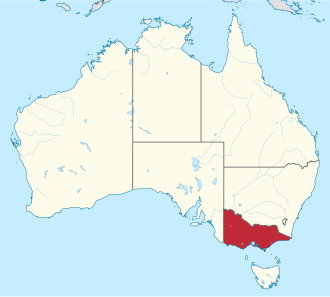
Victoria is Australia's second-most populous state and the smallest on the mainland, located in the continent's southeastern corner. Packed with geographic variety—from temperate rainforests and alpine ski resorts to dramatic coastal ocean drives—Victoria is often referred to as the "Garden State." The capital city is Melbourne, famous around the world for its arts scene, coffee culture, street laneways, and major international sports events.
Geography↑
Land and Water
The geography of Victoria is defined by the southern tail of the Great Dividing Range, which creates cooler alpine regions in the east (the Victorian Alps) and rich agricultural valleys in the center. The northern border is formed almost entirely by the winding Murray River, while the southern coastline meets the tempestuous waters of Bass Strait and the Southern Ocean along scenic highlights like the Great Ocean Road and Wilsons Promontory.
Location: Southeastern Australia
Geographic coordinates: 34° S to 39° S, 141° E to 150° E
Area: total: 87,806 sq mi (227,416 sq km) | land: 87,030 sq mi | water: 776 sq mi | coastline: 1,560 miles (2,512 km)
Bordering Regions: New South Wales, South Australia, Tasmania (sea border across Bass Strait)
Elevation extremes: lowest point: Southern Ocean sea level (0 ft) | highest point: Mount Bogong 6,516 ft (1,986 m)
Population↑
Demographics
Population: 6,950,200 (2026 estimate)
Largest City: Melbourne: 5,210,400 (Greater Melbourne area)
Age structure: 0-14 years: ~17.5% | 15-64 years: ~65.5% | 65 years and over: ~17.0% | Male: 49.4% | Female: 50.6%
Population growth rate: ~1.8% annually
Population density: 79.8 per sq mi (30.8 per sq km)
History↑
Indigenous Heritage and Gold Rush
Aboriginal nations including the Kulin, Wurundjeri, and GunaiKurnai peoples lived across Victoria for thousands of years before European arrival. Pastoral settlers established permanent townships at Portland and Melbourne in the 1830s. Formerly the Port Phillip District of New South Wales, Victoria separated as an independent colony in 1851. That same year, major gold discoveries at Ballarat and Bendigo sparked the Victorian Gold Rush, transforming Melbourne into one of the wealthiest cities in the world before joining the Australian Federation in 1901.
Economy↑
Services, Manufacturing, and Agriculture
Victoria boasts Australia's second-largest state economy, anchored by finance, health, international education, and advanced technology sectors. Regional Victoria remains an agricultural giant, producing dairy, beef, lamb, wheat, and fruit, alongside thriving tourist destinations across the Yarra Valley, Mornington Peninsula, and High Country.
Fun Facts↑
Did You Know?
Penguin Parade: Phillip Island in Victoria is home to the world's largest colony of Little Penguins (also called Fairy Penguins), which waddle ashore every evening at sunset!
Twelve Apostles: The Great Ocean Road along Victoria's coast features giant limestone sea stacks called the Twelve Apostles, carved out over millions of years by wind and waves.
First Federal Capital: When the Commonwealth of Australia was formed in 1901, Melbourne served as the temporary nation's capital for 26 years while Canberra was being designed and built!