Introduction↑
Background
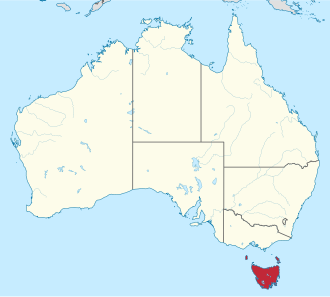
Tasmania, affectionately known as "Tassie," is an island state located 150 miles (240 km) off the southeastern coast of mainland Australia across the Bass Strait. Renowned for its pristine wilderness, cool-climate forests, world heritage national parks, and unique wildlife, over 40% of Tasmania is protected in reserves. The capital city is Hobart, Australia's second-oldest city, nestled beneath kunanyi / Mount Wellington on the Derwent River.
Geography↑
Land and Water
The geography of Tasmania is dominated by rugged mountains, glacial lakes, temperate rainforests, and dramatic sea cliffs. The island features the Central Highlands plateau, deep river valleys like the Gordon and Derwent, and iconic peaks such as Cradle Mountain and Mount Ossa. Surrounding the main island are more than 300 smaller offshore islands, including Flinders Island and King Island in Bass Strait.
Location: Island state off southeastern Australia
Geographic coordinates: 40° S to 43° S, 144° E to 148° E
Area: total: 26,410 sq mi (68,401 sq km) | land: 26,247 sq mi | water: 163 sq mi | coastline: 3,033 miles (4,882 km)
Bordering Regions: Victoria (maritime boundary across Bass Strait)
Elevation extremes: lowest point: Southern Ocean / Tasman Sea sea level (0 ft) | highest point: Mount Ossa 5,305 ft (1,617 m)
Population↑
Demographics
Population: 575,600 (2026 estimate)
Largest City: Hobart: 254,100 (Greater Hobart area)
Age structure: 0-14 years: ~16.8% | 15-64 years: ~62.3% | 65 years and over: ~20.9% | Male: 49.3% | Female: 50.7%
Population growth rate: ~0.6% annually
Population density: 21.8 per sq mi (8.4 per sq km)
History↑
Indigenous Heritage and Van Diemen's Land
Palawa (Tasmanian Aboriginal) communities lived across the island for over 40,000 years prior to European settlement, separated from the mainland when sea levels rose after the last Ice Age. Dutch explorer Abel Tasman became the first European to report the island in 1642, naming it "Van Diemen's Land." Britain established a penal settlement at Risdon Cove in 1803, later founding Hobart. Van Diemen's Land was officially renamed Tasmania in 1856, joining the Australian Federation in 1901.
Economy↑
Tourism, Agriculture, and Clean Energy
Tasmania's economy thrives on eco-tourism, forestry, renewable hydroelectric power, and specialized agriculture. Famous globally for fresh seafood (salmon and oysters), fine wool, apples, and berries, Tassie also supports growing boutique manufacturing and scientific Antarctic research sectors based out of Hobart.
Fun Facts↑
Did You Know?
The Tasmanian Devil: Tasmania is the only place on Earth where wild Tasmanian devils—the world's largest surviving carnivorous marsupial—can be found in nature!
Cleanest Air on Earth: Cape Grim on Tasmania's northwest tip regularly records some of the cleanest, purest air anywhere on the planet due to unpolluted winds blowing thousands of miles across the Southern Ocean.
Apple Isle: Tasmania earned the nickname "The Apple Isle" because it was once one of the world's primary apple exporters, sending millions of cases of apples to Europe every year!