Introduction↑
Background
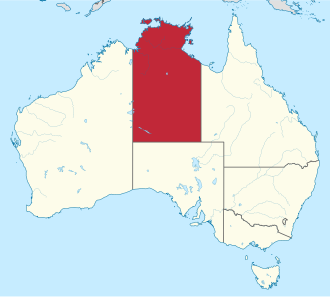
The Northern Territory (NT) is a vast federal territory in central and northern Australia, famous worldwide for its iconic Outback landscapes, ancient Indigenous culture, and dramatic natural wonders. Spanning from the tropical north coast along the Timor Sea down to the desert heartlands of central Australia, the capital city is Darwin, located on the northern coast, while Alice Springs serves as the regional hub for the Red Centre.
Geography↑
Land and Water
The geography of the Northern Territory features two distinct climate zones: the tropical "Top End" in the north, characterized by monsoonal rains, wetlands, and gorges; and the semi-arid "Red Centre" in the south, dominated by desert plains and mountain ranges like the MacDonnell Ranges. Famous geographic landmarks include Kakadu National Park and the giant sandstone monolith of Uluru (Ayers Rock).
Location: Central and Northern Australia
Geographic coordinates: 11° S to 26° S, 129° E to 138° E
Area: total: 548,640 sq mi (1,420,968 sq km) | land: 519,862 sq mi | water: 28,778 sq mi | coastline: 3,400 miles (5,470 km)
Bordering Regions: Western Australia, South Australia, Queensland
Elevation extremes: lowest point: Timor Sea sea level (0 ft) | highest point: Mount Zeil 4,957 ft (1,511 m)
Population↑
Demographics
Population: 253,100 (2026 estimate)
Largest City: Darwin: 150,200 (Greater Darwin area)
Age structure: 0-14 years: ~22.3% | 15-64 years: ~68.4% | 65 years and over: ~9.3% | Male: 51.5% | Female: 48.5%
Population growth rate: ~0.9% annually
Population density: 0.46 per sq mi (0.18 per sq km)
History↑
Indigenous Heritage and Territory Status
Aboriginal Australians have lived in the Northern Territory for over 60,000 years, maintaining the continuous cultural traditions of First Nations peoples like the Anangu and Yolngu. European exploration gained momentum in the 19th century with the construction of the Australian Overland Telegraph Line connecting Adelaide to Darwin. Formerly administered by New South Wales and later South Australia, the NT was transferred to federal control in 1911 and achieved self-government status in 1978.
Economy↑
Mining, Defense, and Eco-Tourism
The economy of the Northern Territory relies heavily on resource extraction—mining manganese, bauxite, gold, and offshore natural gas. Eco-tourism brings millions of visitors to world-famous national parks, while government operations, defense bases, and pastoral cattle stations across the Outback form key pillars of economic activity.
Fun Facts↑
Did You Know?
Uluru's Deep Roots: The famous giant red rock Uluru extends over 1.5 miles (2.5 km) underground, acting like a massive geological iceberg!
Croc Country: The Northern Territory is home to over 100,000 wild saltwater crocodiles—meaning there is almost one crocodile for every two human residents in the territory!
Massive Cattle Stations: Anna Creek Station (located just south of the NT border in SA) and NT stations like Alexandria Station are larger than entire countries like Israel or Slovenia.