Introduction↑
Background
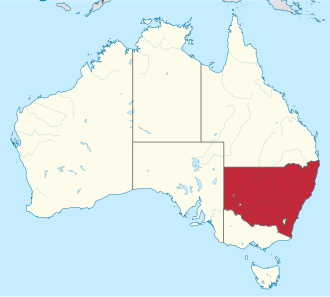
New South Wales (NSW) is Australia's oldest and most populous state, situated on the southeastern coast of the continent. Home to iconic natural harbors, sweeping surf beaches, and the expansive Outback, NSW played a pivotal role in modern Australian history as the site of the first British colony established in 1788. The capital city is Sydney, Australia's largest city, world-famous for its Opera House, Harbour Bridge, and vibrant cultural life.
Geography↑
Land and Water
The geography of New South Wales is remarkably diverse, spanning four main regions: a narrow coastal strip with temperate beaches, the Great Dividing Range highland plateau, fertile agricultural slopes, and vast arid western plains extending into the Outback. NSW is home to Australia's highest peak, Mount Kosciuszko in the Snowy Mountains, as well as major river networks including the Murray and Darling Rivers.
Location: Southeastern Australia
Geographic coordinates: 28° S to 37° S, 141° E to 153° E
Area: total: 309,130 sq mi (800,642 sq km) | land: 304,838 sq mi | water: 4,292 sq mi | coastline: 1,328 miles (2,137 km)
Bordering Regions: Queensland, Victoria, South Australia, Australian Capital Territory
Elevation extremes: lowest point: Tasman Sea / Pacific Ocean sea level (0 ft) | highest point: Mount Kosciuszko 7,310 ft (2,228 m)
Population↑
Demographics
Population: 8,670,105 (2026 estimate)
Largest City: Sydney: 5,638,830 (Greater Sydney area)
Age structure: 0-14 years: ~18.1% | 15-64 years: ~64.5% | 65 years and over: ~17.4% | Male: 49.7% | Female: 50.3%
Population growth rate: ~1.1% annually
Population density: 28 per sq mi (10.8 per sq km)
History↑
Indigenous Heritage and Federation
Aboriginal peoples have inhabited New South Wales for at least 60,000 years, with Nations such as the Eora, Kamilaroi, and Wiradjuri maintaining rich cultural and trade traditions across the region. Captain James Cook claimed the East Coast of Australia for Britain in 1770, naming it New South Wales. In 1788, the First Fleet commanded by Captain Arthur Phillip established a penal colony at Sydney Cove. NSW became one of the original six founding states of the Commonwealth of Australia on January 1, 1901.
Economy↑
Commerce and Resources
New South Wales boasts the largest state economy in Australia, driven by financial services, technology, international tourism, and higher education. Beyond Sydney's financial hub, rural NSW produces vast quantities of wheat, wool, livestock, and wine, while mining centers in the Hunter Valley and Broken Hill yield coal, silver, lead, and zinc.
Fun Facts↑
Did You Know?
Roof of Australia: Mount Kosciuszko in southern NSW is the highest mountain on the mainland Australian continent, and visitors can even go skiing in the Snowy Mountains during winter!
Lord Howe Island: Located 370 miles off the NSW coast in the Tasman Sea, Lord Howe Island is a UNESCO World Heritage site home to the world's southernmost coral reef ecosystem.
The First Coat of Arms Animal: The Red Kangaroo and the Emu featured on Australia's national coat of arms were chosen partly because neither animal can easily walk backwards, symbolizing a nation always moving forward!